
Pests in wheat are one of the biggest challenges facing producers, as they cause major damage to the yield and quality of the grain harvest.
Nanotechnology has emerged as a solution for pest control, combining sustainability and efficiency. Check out the risks caused by pests, as well as examples and how Revella's micro and nanotechnology solutions can add to products.
What are the risks of wheat pests?
Firstly, wheat pests represent a major risk for producers, affecting both productivity and the quality of the harvest.
Among the main problems are
- Reduced grain size and weight;
- Drop in seed germination;
- Loss of commercial value;
- Increased management costs.
That's why investing in sustainable technologies is a smart solution to boost pest control and protect wheat productivity.
See - Nanotechnology in agriculture and the role of Revella
What are the main wheat pests?
Among the main pests are, for example, species of insects and phytophages.
Aphids
Also called aphids, they are insects that thrive in temperatures between 20 and 22 °C during dry periods. They feed on the sap of wheat, causing damage, for example:
- Reduction in grain size and weight;
- Decreased seed germination capacity;
- Possible transmission of phytopathogenic viruses (Barley Yellow Dwarfism Virus and Cereal Yellow Dwarfism Virus) through saliva that reduce the potential of wheat.
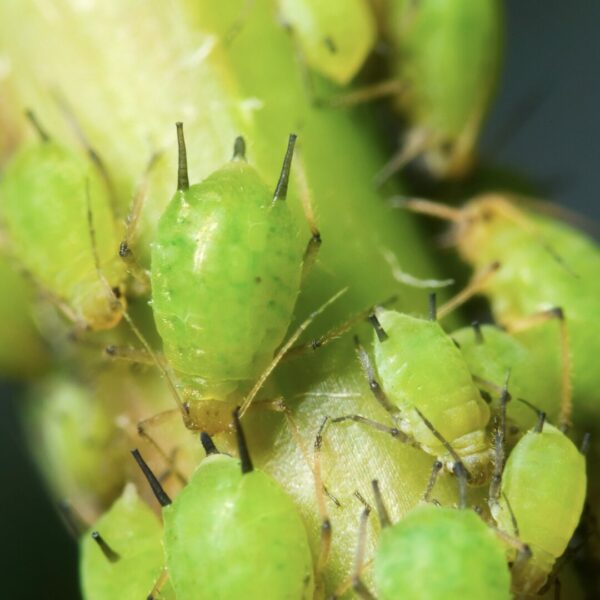
The main aphids known to affect wheat
The aphids most recognized as wheat pests are:
- Green cereal aphid;
- Wheat stalk lungworm or oat aphid;
- Wheat leaf aphid;
- Wheat ear aphid.
Crowns
They are soil insect larvae that develop holometabolically, i.e. egg, larva, pupa and adult, have a whitish color and a "C" shaped body.
They feed not only on seeds, but also on plants and roots; spots are the result of their attacks and they are very common in Rio Grande do Sul and Santa Catarina.
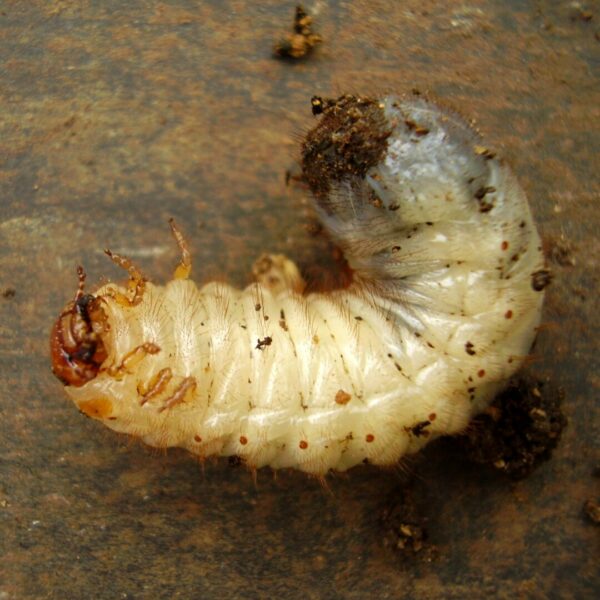
Cormorant species known as wheat pests
There are two main species:
- Diloboderus abderus or pasture cormorant;
- Phyllophaga triticophaga or wheat crow.
Bed bugs
Bedbugs are sucking insects that belong to the suborder Heteroptera and Hemiptera, just to give you an example. They have a flattened body, no wings and are between 4 and 7 mm in size.
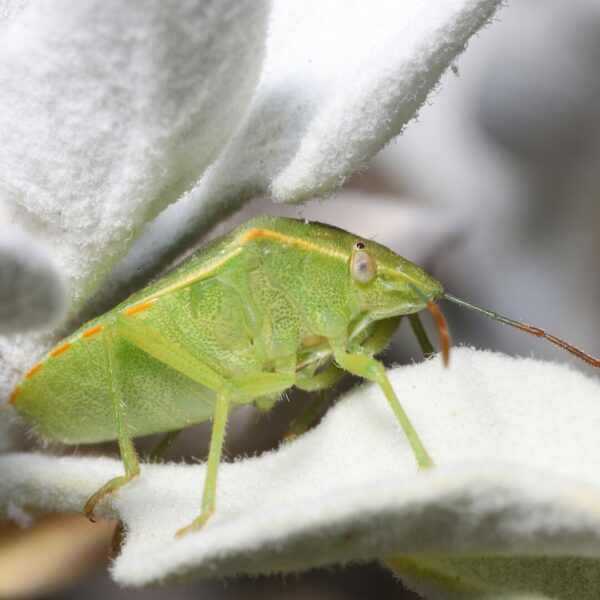
The most common bedbugs in wheat
- Green-bellied bedbug, Dichelops furcatus and Dichelops melacanthus;
- Greenbug, Nezara viridula;
- Wheat bug, Thyanta perditor.
Defoliator caterpillars
In principle, defoliator caterpillars are insects that cause significant damage to the wheat crop, feeding on the leaves and reducing the leaf area available for photosynthesis. This ultimately results in a loss of plant vigor, less development and a reduction in productivity.
In addition, these pests have a high reproductive capacity and adapt quickly to climatic conditions, making them a constant challenge in agricultural management.
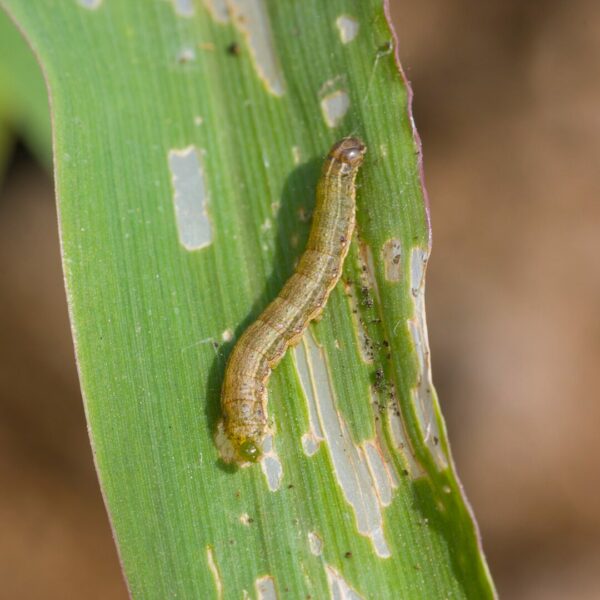
The most common defoliator caterpillars in wheat
Cartridge caterpillar(Spodoptera frugiperda);
Wheat caterpillar(Pseudaletia sequax).
Drills
Borers are pests that attack wheat in a different way to caterpillars, as they penetrate plant structures such as stems, ears and/or roots, directly compromising their integrity.
These insects pierce the internal parts of the wheat, hindering the transport of nutrients and water, as well as encouraging the entry of pathogens.
Main species
- Thatch borer or Diatraea saccharalis;
- Wheat borer or Rupela albicostalis.
How to combat the wheat bug?
Bedbugs, such as greenbugs and wheatbugs, can be controlled through frequent monitoring and the application of products with insecticidal properties at the beginning of infestations.
Finally, practices such as proper straw management and eliminating weeds at the edges of the field are also fundamental to preventing their proliferation.
How to get rid of the defoliator caterpillar?
Frequent inspection of the crop, especially the younger leaves where the caterpillars begin to feed, is an important strategy. This practice helps to identify the infestation early on.
For situations in which biological control is occasionally not enough, the use of selective insecticide products may be necessary, always respecting the recommended doses and prioritizing products that do not cause resistance or severe environmental impacts.
In addition, cultural management practices, such as crop rotation and the elimination of plant remains, help to reduce the presence of caterpillars, creating a less favorable environment for their proliferation.
The use of products containing micro- and nanotechnology is one of the strategies that can enhance the effectiveness of products applied at lower doses, thus ensuring more efficient control.
But what is good for getting rid of wheat borers?
Pheromonal traps can be used to monitor the presence of adult borers attacking wheat stalks and to make localized applications of products
Planting resistant cultivars and eliminating the remains of other crops are also important strategies for reducing its population.
The application of technologies, with Revella's micro and nanotechnological additives, can enhance the products used to control pests.
How to control the wheat cormorant?
Start by monitoring the soil for signs of wilted plants and the presence of C-shaped larvae.
Crop rotation and proper soil preparation help interrupt the corm's life cycle, while the use of entomopathogenic nematodes offers a sustainable solution.
In more serious cases, opt for specific insecticides applied in seed treatment or directly to the soil.
Benefits of micro and nanotechnology in combating wheat pests
The application of micro and nanotechnology in pest management is revolutionizing the way agricultural additives are used.
This technology, when applied, improves the effectiveness of products, reduces waste and minimizes environmental impacts.
- Controlled release: actives encapsulated in microstructures, such as essential oils, offer a gradual and controlled release, which increases the product's duration of action on the crop.
This feature reduces the frequency of reapplications, saving resources and increasing crop protection.
- Potentiation of action: the high surface/volume ratio of the microstructures provides a greater area of contact between the active ingredients and their targets, such as insects or fungi.
This leverages the effectiveness of additives, even at low doses, optimizing crop management.
- Reduced environmental impact: microencapsulation reduces losses through volatilization, degradation and leaching, which means more effective action with lower application doses.
Applying Revella technology to combat wheat pests
Revella products, based on encapsulated essential oils, are examples of how technology can benefit pest management:
- LarvShield: enhances repellents and dislodgers, helping to manage insects such as aphids, mealybugs and whiteflies.
Get to know - Larvshield: pest and disease control
- Bioaction W-03: compatible with products with repellent and adjuvant properties, offering multifunctional action against pests.
- Bioaction W-02 and Bioaction W-04: with natural properties that help manage diseases caused by insects and fungi, and are compatible with products with fertilizing properties and seed polymers.
Revella technology does not replace pesticides, but acts as an ally in integrated pest management, promoting efficiency, sustainability and greater environmental safety in agribusiness.
Nanotechnology for agriculture: increase the performance of your products to mitigate wheat pests
Revella has expertise in developing additives focused on high performance and sustainability for the agro-industry.
Contact our experts using the form below and find out more about our products that make up various agricultural inputs, such as fertilizers, adjuvants and seed treatment.
References
Coelho, Marlene de Barros. Nanotechnological techniques for agriculture and livestock: a focus on pest and disease control, nutrition and animal health. Campo Grande, MS: Embrapa Gado de Corte, 2020. 50 p. (Documentos / Embrapa Gado de Corte, ISSN 1983-974X; 273).
PEREIRA, Paulo Roberto Valle da Silva; SALVADORI, José Roberto; LAU, Douglas. Wheat: integrated pest management*. Curitiba: SENAR-PR, 2010.