Discover how nanoparticles are transforming agriculture, increasing efficiency in crops such as soybeans, corn, sugarcane and coffee, and bringing innovation to agribusiness with Revella. Revella Tech.
Agriculture faces growing global challenges, from the need to increase food production to cater for a growing population to the search for more sustainable and efficient methods.
In this context, nanoparticles have emerged as a revolutionary solution with new possibilities for agricultural management and plant nutrition.
Recent studies estimate that the global nanobiotechnology market in agribusiness will grow at a rate of 15% per year, reaching values close to 12 billion dollars by 2030 (Lira Saldivar et al., 2018).
This trend reflects the growing interest in technologies that increase efficiency in the use of resources, reduce environmental impacts and improve crop productivity. The arrival of this technology signals a future for the agricultural sector.
But how exactly nanoparticles act? What are their real benefits?
And why are they here to stay?
Read on to explore this technical information with Revella Tech solutions.
Happy reading!
NANOPARTICLES: WHAT ARE THEY AND HOW DO THEY WORK IN AGRICULTURE?
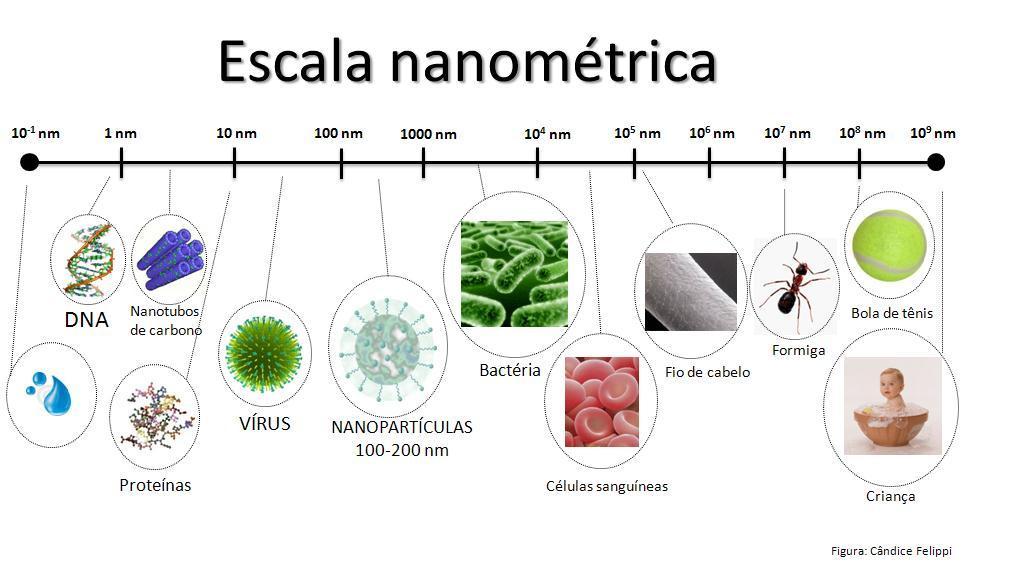
Nanoparticles are materials manipulated on a nanometric scale (1 to 100 nanometers), which gives them unique properties such as a high contact surface and the ability to charge compounds.
In agriculture, these particles can be applied on various fronts, such as fertilizers, pesticides, pest control and even soil monitoring.
IMPACTS ON THE MAIN AGRICULTURAL CROPS
- Soybeans and corn: nanoparticles have been tested to facilitate nutrient absorption and reduce losses during periods of water stress. For example, the application of nanofertilizers improves photosynthesis and grain formation.
- Sugarcane: the integration of nanoparticles in sugarcane management has shown potential to increase efficiency in the application of herbicides and fertilizers, which reduces operating costs.
- Coffee and cotton: experiments with nanocompounds have promoted greater resistance to pests and diseases, as well as improving the final quality of the beans and fibers.
- Vegetables and fruit (HF): the application of nanoencapsulates increases the absorption of micronutrients and improves the physiological response of plants to abiotic stresses.

Did you know?
"Additives based on copper nanoparticles promote a 66% of the dose compared to complexed organic copper, in application associated with multisite fungicides". Learn more about Revella Tech solutions(Click here!).
From now on we'll explain a little more about nanoparticles!
ABSORPTION AND TRANSLOCATION OF NANOPARTICLES IN PLANTS
When applied to the leaves, the nanoparticles penetrate the tissues through the stomata, the structures responsible for gas exchange between the plant and the environment.
Once inside the plant, they are translocated via the phloem, reaching different plant organs (Landa, 2021).
In the soil, the nanoparticles enter the roots through the apoplast, passing through the cortex and endodermis.
Translocation occurs through the xylem, allowing the transportation of raw sap to the leaves and branches (Bagherzadeh Homaee et al., 2015).
Why use nanoparticles instead of traditional inputs?
The answer lies in efficiency!
While conventional methods of applying fertilizers and pesticides have losses due to leaching or evaporation, nanoparticles ensure greater adherence and penetration into plant tissues.
This means less waste and faster results!
Benefits of nanoparticles in agriculture
- More efficient use of nutrients
- Nanofertilizers deliver nutrients directly to the roots or leaves of plants in a controlled manner, reducing waste and making assimilation more efficient.
- Reducing environmental impacts
- As the application is more precise, there is less contamination of soil and water bodies.
- Improved pest and disease control
- Nanoencapsulates release pesticides gradually, protecting crops for longer.
- Resistance to stress
- Research shows that nanoparticles can increase plant tolerance to stresses such as drought and high temperatures.
- Ethylene inhibition in fruit trees
- Some nanoparticles act by inhibiting ethylene, the hormone responsible for ripening and senescence. The ions present replace copper ions in ethylene receptors, delaying the ripening of fruits such as apples and reducing pre-harvest losses (Syu et al., 2014).
- Production and accumulation of anthocyanins
- Specificnanoparticles stimulate the accumulation of anthocyanins in fruits such as strawberries, blueberries and blackberries. These natural antioxidants help fight oxidative stress, eliminating free radicals and increasing fruit quality (Landa, 2021).
- Stimulating root development
The nanoparticles induce the production of auxins and stimulate the development of lateral roots, contributing to a more adequate root system (Bagherzadeh Homaee et al., 2015)
NANOTECHNOLOGY IN THE FIELD: SUCCESS STORIES
- Soybeans and corn in Brazil: the application of zinc and copper nanoparticles to grain crops has increased yields by up to 10%, even in regions with low soil fertility.
- Sugarcane production in tropical regions: the use of nanoparticles to transport nitrogen has reduced nitrogen fertilizer consumption by 20%, without affecting productivity.
- High-value vegetables and fruit: studies carried out on tomato and grape crops have shown that nanoparticles improve the antioxidant content and appearance of the fruit.
COMPARING NANOPARTICLES vs. CONVENTIONAL METHODS
Nanotechnology has been consolidated as one of the main innovations in modern agriculture, especially due to its ability to increase efficiency in the use of inputs and improve results in various crops.
When working with particles it is possible to control the release of nutrients, pesticides and other compounds that are fundamental to agricultural management more precisely.
This precision reduces losses, facilitates the availability of compounds to plants and minimizes environmental impacts, providing a new technological approach compared to conventional methods.
Unlike traditional formulations, which often have limitations in terms of uniformity and absorption, nanoparticles stand out for their ability to penetrate biological barriers and reach specific targets. This process not only facilitates the use of resources, but also makes it possible to introduce new mechanisms of action.
Table 1. Comparison between nanoparticles and traditional methods (Adapted from various authors).
| Features | Nanoparticles | Traditional methods |
| Nutrient absorption | High, with controlled release | Moderate, with significant losses |
| Environmental impact | Reduced | High, due to leaching losses |
| Cost-effectiveness | Greater efficiency justifies the initial cost | Less efficiency can increase total costs |
HOW DO NANOPARTICLES HELP THE FUTURE OF AGRICULTURE?
Agriculture is facing pressure to feed a global population projected to reach 10 billion by 2050.
Conventional solutions cannot meet demand without increasing environmental impacts.
Nanoparticles, on the other hand, offer more precise and sustainable alternatives.
IS THIS TECHNOLOGY ACCESSIBLE TO SMALL PRODUCERS?
Although initial adoption may seem expensive, the reduction in losses and increase in productivity make nanoparticles a viable option in the medium term.
Revella Tech is also investing in research to democratize access to this technology and bring innovations to the field.
PROMISING
The synergy between nanotechnology and biotechnology further expands the potential of nanoparticles.
For example:
- Nanostructured biofertilizers: improving soil health and nutrition efficiency.
- Encapsulated biological agents: protect beneficial organisms against adverse conditions.
Revella Tech develops and produces additives that are synonymous with high performance and sustainability for the agro-industry.
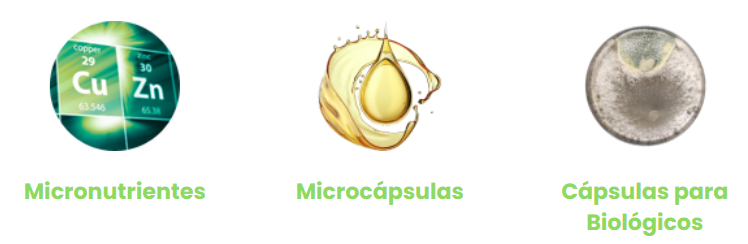
Products based on bioactives and nutrients structured in nano size are incorporated by our customers into various agricultural inputs such as fertilizers, adjuvants and seed treatment.


CONCLUSION
Nanoparticles not only introduce technological innovation, but transform the basis of agricultural production, opening up new possibilities for more precise, efficient and environmentally responsible management.
Its application transcends the boundaries of conventional practices, offering solutions that increase crop productivity while reducing the impact on the environment and operating costs.
With the continuous advance of research and the support of companies such as Revella Tech, this technology is consolidating itself as an innovation to face the challenges of modern agriculture.
The future of the sector points to a growing integration between science and practice in the field, reinforcing the viability of more sustainable and competitive production on a global scale.
Want to know more?
Revella Tech supplies sustainable additives, composed of nanoparticle-based suspensions stabilized with molecules from plant extracts, using 100% Brazilian technologies.
References
Bagherzadeh Homaee, M., & Ehsanpour, A. A. (2015). Physiological and biochemical responses of potato (Solanum tuberosum) to nanoparticles and nitrate treatments under in vitro conditions. Indian Journal of Plant Physiology, 20(3), 353-359. https://doi.org/10.1007/s40502-015-0188-x
Landa, P. (2021). Positive effects of metallic nanoparticles on plants: Overview of involved mechanisms. Plant Physiology and Biochemistry, 161, 12-24. https://doi.org/10.1016/j.plaphy.2021.01.039
Lira Saldivar, R. H., Mendez Arguello, B., Santos Villarreal, G. D., & Vera Reyes, I. (2018). Potential of nanotechnology in agriculture. Acta Universitaria, 28(2), 9-24. https://doi.org/10.15174/au.2018.1575
Syu, Y. Y., et al. (2014). Impacts of size and shape of silver nanoparticles on Arabidopsis plant growth and gene expression. Plant Physiology and Biochemistry, 83, 57-64.